
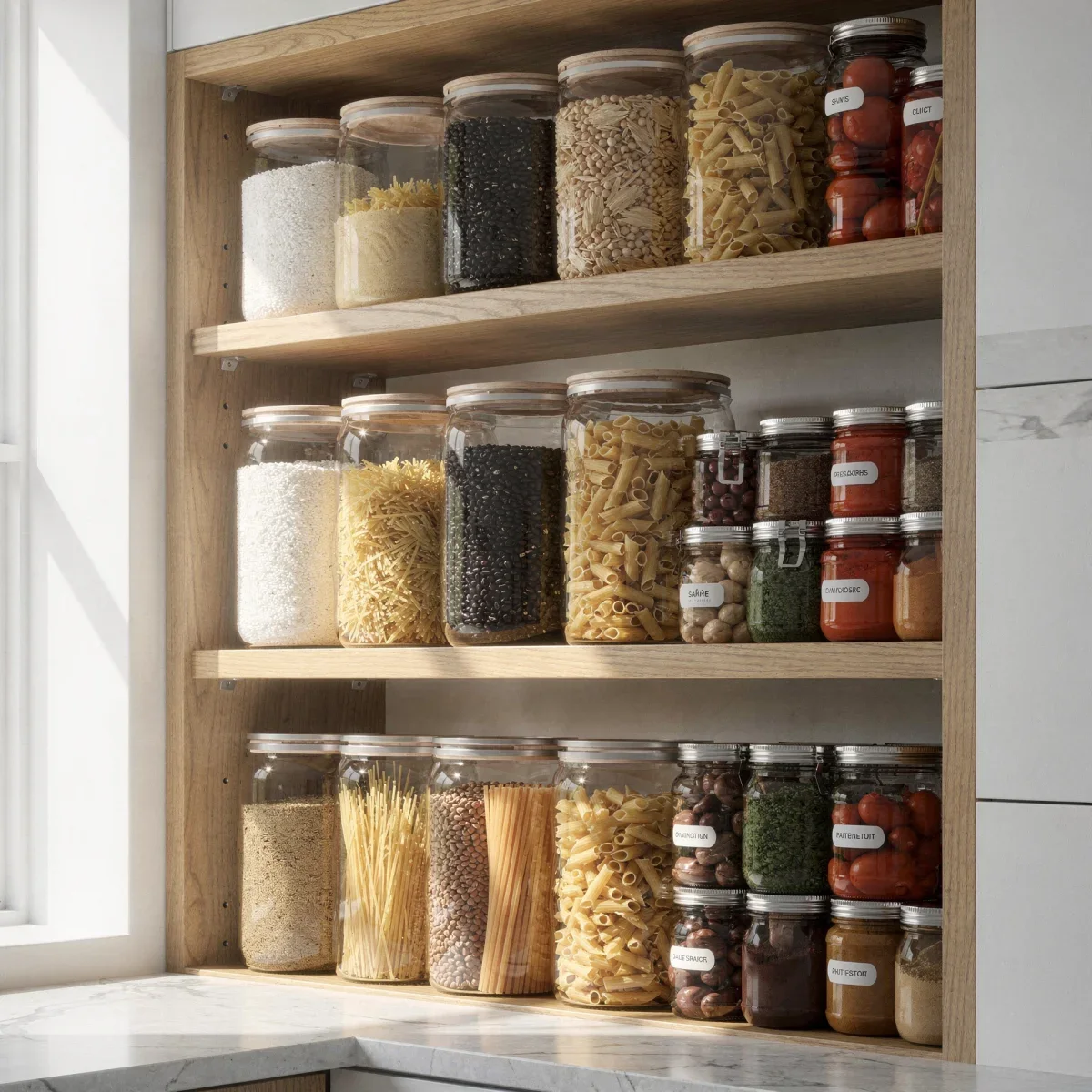
Starting your own kitchen from scratch can feel overwhelming when grocery prices add up quickly. If you are staring at empty cabinets, you do not need to drop $200 in a single shopping trip. Learning how to build a starter pantry on a budget allows you to cook flavorful, wholesome meals without draining your bank account.
Advertisements
1. Focus on High-Yield Foundation Grains
Grains and dry carbohydrates offer the best cost-to-calorie ratio in the grocery aisle. A single five-pound bag of white or brown rice costs just a few dollars at stores like Walmart or Aldi and provides dozens of meal foundations. Pair your grains with simple proteins or sauces for fast weeknight dinners.
Stock up on these foundational staples first:
- Long-grain white or brown rice: Versatile, shelf-stable, and pairs with any cuisine.
- Dry pasta: Shapes like penne, spaghetti, and rotini frequently sell for under $1.50 per box.
- Rolled oats: Excellent for hot breakfasts, baking, or homemade granola.
- All-purpose flour: Key for quick breads, thickening sauces, and basic batters.
2. Pick Multipurpose Canned Goods
Canned ingredients give you instant texture and rich flavor while cutting down prep time. They have long shelf lives, so you can grab a couple of extra cans whenever they go on sale at Target or your local supermarket.
| Pantry Staple | Average Cost | Best Uses |
|---|---|---|
| Canned Black or Pinto Beans | $0.80 – $1.20 | Tacos, grain bowls, chili, soups |
| Diced or Crushed Tomatoes | $0.90 – $1.40 | Pasta sauce, curries, stews |
| Canned Tuna or Chicken | $1.00 – $1.80 | Salads, casseroles, quick sandwiches |
| Low-Sodium Broth | $1.30 – $2.00 | Cooking grains, making soups and gravies |
3. Select Essential Seasonings and Fats
Bland food leads to expensive takeout orders. You do not need a spice rack with thirty jars; five or six workhorse seasonings can create hundreds of distinct flavor profiles. Buy store brands or check the international food aisle, where spice pouches often cost significantly less than glass bottles.
Prioritize neutral cooking oil (like vegetable or canola oil), kosher salt, black peppercorns, garlic powder, ground cumin, and smoked paprika. Add a bottle of basic soy sauce and distilled white or apple cider vinegar to balance savory dishes with necessary acid.
4. How to Stage Your Starter Pantry on a Budget
Trying to purchase everything in one afternoon is the fastest way to blow your grocery budget. Instead, use a three-week rollout strategy:
- Week 1 (Base): Buy salt, cooking oil, one 5 lb bag of rice, and two boxes of pasta ($10–$12).
- Week 2 (Canned Essentials): Pick up four cans of beans, four cans of crushed tomatoes, and two cans of tuna ($10–$14).
- Week 3 (Flavor Builders): Add garlic powder, cumin, black pepper, and soy sauce ($8–$12).
Quick Takeaways
- Start small by spreading your pantry shopping across three to four weekly grocery trips.
- Stick to high-yield dry goods like rice, pasta, and beans to keep cost-per-serving under $1.00.
- Shop discount retailers like Aldi, Walmart, and ethnic grocery markets for spices and canned goods.
Frequently Asked Questions
What is the absolute cheapest way to stock a pantry?
Buy dry beans and whole bulk grains instead of canned or pre-seasoned versions. Shopping at discount supermarkets or ethnic food markets will stretch your dollars significantly further than traditional grocery chains.
How much does a basic starter pantry cost?
A practical starter pantry costs between $35 and $50 total. Spreading purchases over a month allows you to spend just $10 extra each week while gathering all essential cooking bases.
What pantry items should I avoid buying right away?
Skip specialty oils, rare whole spices, pre-made spice blends, and niche sauces. Stick to versatile basics until you establish regular cooking habits and know what ingredients you consistently use.
Equipping your kitchen with a practical starter pantry on a budget gives you the freedom to cook delicious, stress-free meals whenever you want. Pick three foundational items to add to your cart on your next grocery run, and explore our weekly budget meal plans to put your new pantry to work.