
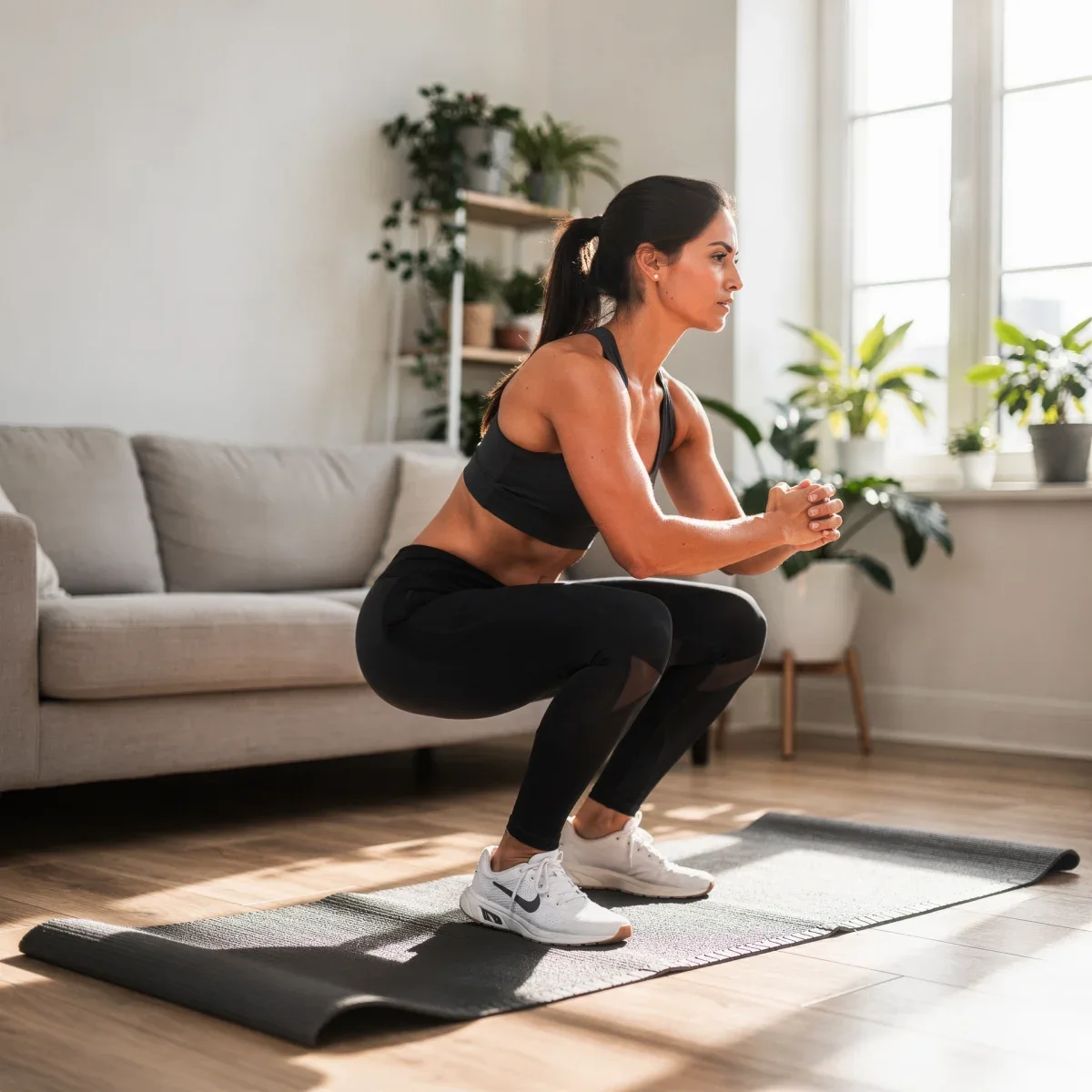
Starting a new fitness routine can feel overwhelming, especially if you have never lifted weights before. The good news is that starting beginner strength training at home requires zero fancy equipment and takes less than thirty minutes. You will learn the foundational movements to build functional strength, protect your joints, and boost your daily energy right from your living room.
Advertisements
Why Home Strength Training Works for Beginners
Bodyweight movements create enough resistance to stimulate muscle growth and improve bone density. According to general guidance from the Centers for Disease Control and Prevention (CDC), adults benefit from muscle-strengthening activities at least two days per week. Working out at home eliminates commute times and gym intimidation, making it easier to build a consistent habit.
The 5 Essential Beginner Exercises
Mastering these five foundational movement patterns will work all major muscle groups without stressing your joints.
- Bodyweight Box Squat: Stand in front of a sturdy chair or couch. Lower your hips back and down until you gently touch the seat, then press through your heels to stand back up. Perform 10 to 12 reps.
- Incline Push-Ups: Place your hands shoulder-width apart against a kitchen counter or sturdy table. Lower your chest toward the surface while keeping your core tight, then push back up. Aim for 8 to 10 reps.
- Glute Bridges: Lie flat on your back with your knees bent and feet flat on the floor. Squeeze your glutes to lift your hips toward the ceiling, pause for a second, and slowly lower down. Do 12 to 15 reps.
- Doorframe or Towel Rows: Stand facing a sturdy doorframe, grip the edge at chest height, lean back slightly with straight arms, and pull your chest toward the frame. Aim for 10 to 12 reps.
- Dead Bug: Lie on your back with arms reaching toward the ceiling and knees bent at 90 degrees. Slowly lower your right arm and left leg toward the floor, return to the start, and switch sides. Complete 8 reps per side.
Your Weekly Beginner Schedule
Consistency matters more than intensity when you start out. Give your muscles at least 48 hours to recover between sessions.
| Day | Activity | Focus |
|---|---|---|
| Monday | Full-Body Circuit | 2 to 3 rounds of the 5 exercises |
| Wednesday | Full-Body Circuit | 2 to 3 rounds with focus on slow tempo |
| Friday or Saturday | Full-Body Circuit | 2 to 3 rounds with extra rest between sets |
How to Progress Safely
As exercises begin to feel easier, challenge your body without immediately buying heavy weights. You can slow down the lowering phase of each movement to three full seconds, add one or two repetitions per set, or pick up a pair of inexpensive resistance bands from Target or Amazon (typically $10 to $20). Listen to your body and avoid pushing through sharp joint discomfort.
Quick Takeaways
- You only need your body weight and a sturdy chair to complete an effective full-body workout.
- Aim for two to three 25-minute sessions each week with rest days in between.
- Focus on controlled form and tempo before increasing repetitions or resistance.
Frequently Asked Questions
How many days a week should a beginner lift weights?
Two to three non-consecutive days per week is ideal for beginners. This frequency stimulates muscle growth while allowing adequate rest for tissue recovery and joint adaptation.
Can you build muscle with just bodyweight exercises?
Yes. Bodyweight exercises provide sufficient tension to build lean muscle and improve strength, especially for beginners focusing on proper form and controlled movement tempos.
What equipment should I buy first for a home gym?
Start with a comfortable exercise mat and a set of looped resistance bands. They cost under $25 total, store easily, and add adjustable resistance to basic movements.
Start Your Home Routine Today
Building strength does not require complicated routines or expensive memberships. By sticking to these basic movements two to three times a week, you will create a sustainable habit that supports your overall health and mobility. Pick two days this week to try your first round of beginner strength training at home, and track how you feel afterward.
This article is for informational purposes only and is not a substitute for professional medical advice. Talk to your doctor before making changes to your health routine.