
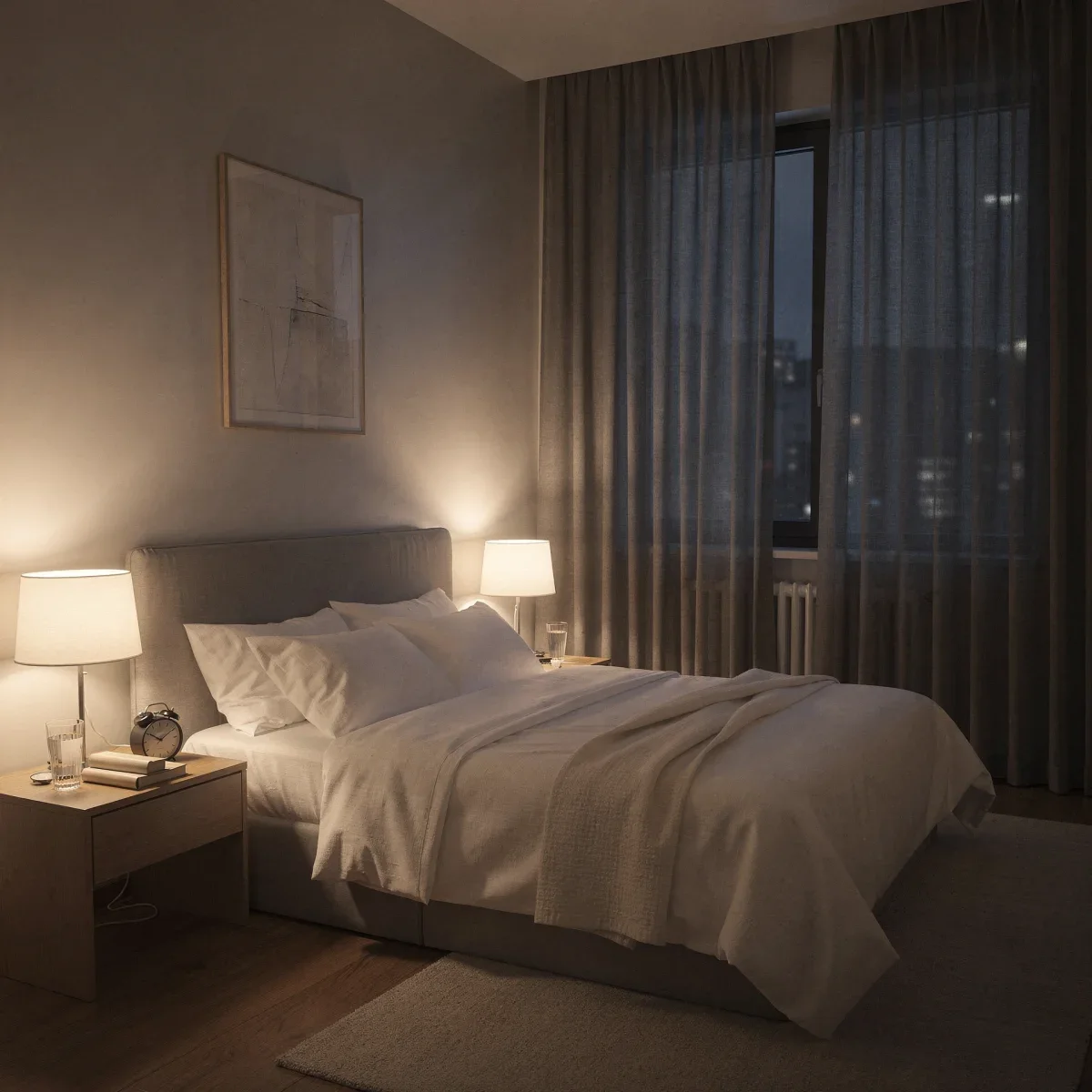
If you toss and turn most nights, your evening routine might not be the only culprit. Your physical environment plays a massive role in how quickly you drift off and how soundly you stay asleep. With the right bedroom setup for sleep, you can turn your space into a calming sanctuary that signals to your brain it is time to rest.
Advertisements
1. Dial in the Temperature and Airflow
Your body temperature naturally dips as you prepare to sleep, and a room that is too warm can disrupt this process. Most sleep specialists suggest keeping your thermostat between 60°F and 67°F for optimal comfort.
- Thermostat setting: Keep the room cool, aiming for around 65°F.
- Air circulation: Run a ceiling fan or a quiet oscillating fan to prevent stuffiness.
- Air quality: Consider an air purifier from Target or Amazon to reduce dust, pet dander, and seasonal allergens.
2. Master Light Control
Light suppresses melatonin, the hormone responsible for regulating your sleep-wake cycle. Even small amounts of artificial light from streetlamps or electronics can interrupt deep sleep stages.
| Light Source | Quick Fix | Budget Option |
|---|---|---|
| Streetlights / Sunlight | Blackout curtains | Blackout window film or eye mask ($10–$20) |
| Device standby lights | Light-dimming stickers | Black electrical tape |
| Evening lamps | Warm amber smart bulbs | Low-wattage warm LED bulbs |
3. Manage Sound and Acoustics
Sudden noises like traffic, neighborhood barking, or apartment hallway chatter can pull you out of restorative sleep. The goal is to create a consistent acoustic baseline.
A dedicated white noise machine or a steady fan masks jarring background sounds effectively. If you prefer ambient sounds, apps on your phone can help, but keep the device face down across the room to avoid screen distractions.
4. Refresh Your Bedding and Mattress
Your mattress and sheets directly affect your physical alignment and temperature regulation throughout the night. If your mattress is older than seven to eight years, or if you wake up with aches, it may be time for a replacement.
- Breathable sheets: Choose natural fabrics like 100% cotton, linen, or bamboo viscose instead of synthetic polyester.
- Pillow support: Match your pillow loft to your sleeping position—thicker for side sleepers, flatter for back or stomach sleepers.
- Mattress condition: Rotate your mattress regularly to ensure even wear and consistent support.
Quick Takeaways
- Keep your bedroom temperature between 60°F and 67°F to support your natural circadian rhythm.
- Block light completely with blackout curtains and warm, low-intensity evening lighting.
- Choose breathable natural fibers for your sheets and replace worn pillows to prevent neck strain.
Frequently Asked Questions
What is the ideal room temperature for deep sleep?
Most medical experts recommend a bedroom temperature between 60°F and 67°F. Cooler rooms support your body's natural thermal drop during sleep cycles.
Do blackout curtains really make a difference?
Yes. Blackout curtains block ambient street lighting and morning sun, preventing melatonin suppression and helping you stay asleep longer without early morning awakenings.
How often should I replace my bed pillows?
You should replace standard bed pillows every 1 to 2 years. Over time, pillows lose structural support and accumulate dust mites, oils, and allergens.
Build Your Ideal Rest Space
Making small adjustments to your space can lead to noticeable improvements in your energy and mood. Audit your room tonight using this checklist to build the ultimate bedroom setup for sleep. For more practical wellness guides, explore our home health routines.
This article is for informational purposes only and is not a substitute for professional medical advice. Talk to your doctor before making changes to your health routine.