
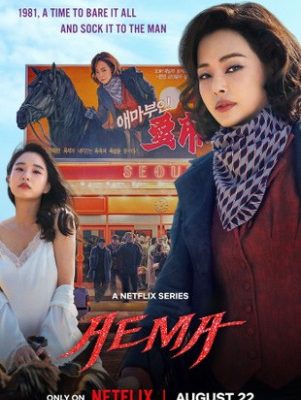
Greetings, folks! What’s new? Today, I’m thrilled to delve into the drama Aema, which has recently debuted on Netflix and is stirring conversations as a provocative examination of the gritty aspects of the Korean film industry.
Advertisements
Launched on August 22, 2025, Aema comprises six episodes, each around 60 minutes long, all crafted under the direction of Lee Hae-young, who is acclaimed for his cinematic works like ‘Believer’. This Netflix original beckons audiences into the murky, corruption-laden realm of 1980s Korean cinema, where two resolute women strive to forge pioneering erotic films in the face of industry censorship and male hegemony.
The narrative centers on the real-life challenges encountered while producing the notorious film “Madame Aema”, a title that sparked controversy yet achieved immense popularity during its time. Aema boldly confronts the sobering truths of the entertainment sector, delivering a satirical yet meaningful exploration of how women maneuvered through an overwhelmingly patriarchal landscape to voice their narratives.
Unveiling the Provocative Filmmaking Journey of Korea’s Most Notorious Film
Set against the backdrop of 1980s Korea, the narrative follows a seasoned actress and an aspiring starlet who challenge the entrenched male authority and backstage corruption while working on the audacious “Madame Aema”. This series transcends merely showcasing the end product; it delves into the intricate creative journey, uncovering the multitude of challenges faced behind the scenes. Each episode unveils another layer of industry politics, from rigorous censorship to unscrupulous producers who regard women as mere products, not artists.
Through a vivid portrayal, Aema encapsulates filmmaking as an intricate blend of art and commerce, highlighting the often-contentious relationship between creative ambitions and the harsh realities of an industry that punishes those daring enough to challenge the status quo.
Jeong Hee-ran: The Seasoned Star Championing Artistic Liberation
Starring Lee Ha-Nee as Hee-ran, recognized for her roles in series like Pasta, The Fiery Priest, and The Rebel Hong Gil Dong, this character embodies the seasoned performer skillfully navigating the perilous waters of the industry while steadfastly refusing to concede on impactful projects. Hee-ran’s journey throughout Aema portrays a woman standing at a critical juncture, leveraging her influence and experience to shield emerging actresses while advocating for creative autonomy.
Lee Ha-Nee’s remarkable performance strikes a balance between fragility and unwavering resolve. Her interpretation of Hee-ran vividly illustrates the mental strain of relentlessly striving for respect within an industry that often reduces women to their physical attributes, disregarding their competency and intellect.
Shin Ju-ae: The Aspiring Talent Eager to Break Through
Portrayed by Bang Hyo-rin, Ju-ae is an aspiring actress currently working as a nightclub dancer, representing the fierce ambition and desperation of those willing to risk it all to pursue their dreams. Ju-ae’s storyline in Aema is particularly captivating as it reveals the entertainment industry’s tendency to exploit women’s aspirations, presenting offers laden with perilous implications.
The evolving relationship between Hee-ran and Ju-ae forms a crucial emotional backbone of the series. Transitioning from professional necessity to a true friendship, their bond narrates a compelling tale of female unity in adversarial settings.
Navigating Between Artistic Aspirations and Industry Challenges
The most gripping moments within Aema manifest when the women’s artistic aspirations clash with the prevailing exploitative practices of the industry. Their audacious efforts invite censorship yet culminate in box office success, crafting a convoluted scenario where achievement comes at a steep personal toll. The series eschews simple resolutions, instead portraying the intricate realities of progress in conservative societies.
These confrontations illustrate how Aema employs its historical context to reflect on present-day issues. The struggles depicted from 1980s Korea resonate with ongoing dilemmas faced in contemporary entertainment sectors across the globe, adding a layer of relevance to this period piece.
A Success Story for Netflix
Presently, Aema boasts a 6.1 rating on IMDb, with audiences commending its fearless narrative and outstanding performances from the main actresses. This series, released in its entirety on Netflix, invites viewers worldwide to engage with its audacious and witty storytelling. As a period piece, it features stars like Lee Hanee and Jin Sun-kyu, offering a humorous critique of the 1980s male-controlled Korean film landscape. Critics have underscored the series’ unflinching examination of industry corruption alongside its celebration of female creativity in restrictive situations.
A Striking Commentary on Creative Liberty and Feminine Empowerment
For aficionados of historical dramas that confront modern themes with humor and boldness, Aema stands out as a must-watch on Netflix. This is more than a portrayal of the film industry; it is a poignant reflection on the tribulations women endure to narrate their own stories in environments that actively resist them.
Why This Examination of the Industry Deserves Your Focus
Pros:
- Impressive performances from Lee Ha-Nee and Bang Hyo-rin that enrich multi-dimensional characters
- Uncompromising representation of the entertainment industry’s corruption, eschewing sensationalized portrayals
- Excellent blend of historical authenticity and contemporary resonance addressing systemic injustices
- Clever writing that employs humor to address serious subject matter without undermining its significance
- Visually stunning period production that authentically re-creates 1980s Korean film sets and cultural nuances
Cons:
- Heavy themes related to industry exploitation may trigger discomfort in some viewers
- Complexities of industry politics could be challenging to grasp for those unfamiliar with Korean cinematic history
- Some viewers may find limited appeal outside of those particularly interested in Korean entertainment narratives
- Certain episodes bear a documentary-like quality rather than a standard dramatic presentation
- Male characters may seem less developed in comparison to the richly drawn female leads
Aema asserts that the most significant narratives are often those which the powerful prefer remain unheard, rendering it essential viewing for anyone who appreciates bold storytelling that seeks to dismantle barriers.
Series Overview
- Total Episodes: 6 episodes (Complete limited series)
- Available On: Netflix
- Year of Release: 2025
- Rating on IMDb: 6.1/10
- Genre: Historical Comedy-Drama
- Type of Production: K-Drama (Korean Drama)
- Status: Complete limited series, now accessible
- Main Cast: Lee Ha-Nee (Jeong Hee-ran), Bang Hyo-rin (Shin Ju-ae)
- Adversary: Systemic corruption in the industry and censorship (various male figures in the field)